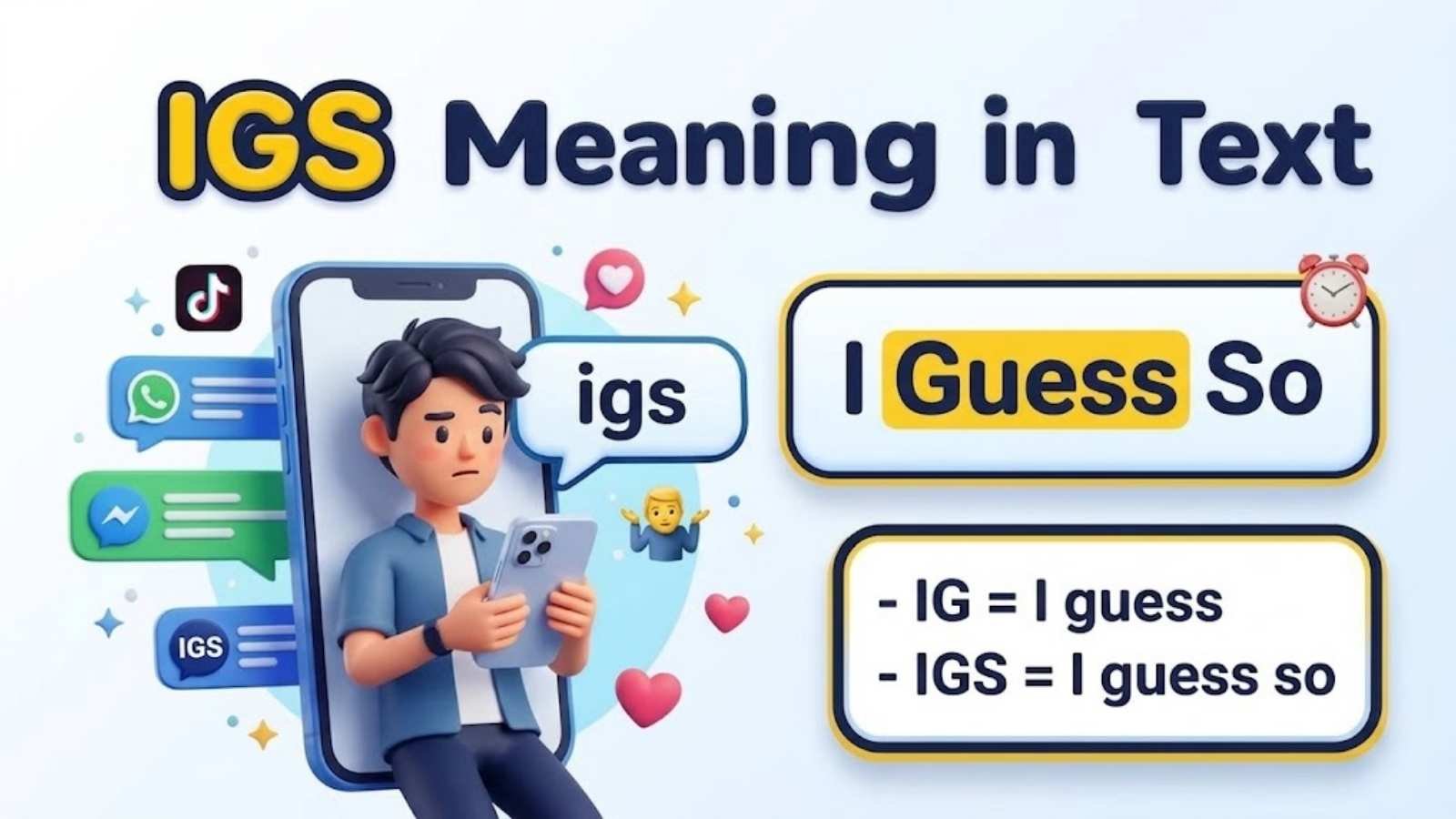
You see it at the end of a text “igs” and for half a second, you freeze. Is that a typo? A mood? A polite way of saying “sure, whatever”? You’re not imagining things; this tiny abbreviation carries more tone than its three letters let on.
That’s exactly why we put this guide together. Just like people search for the FB meaning in text when they come across an unfamiliar abbreviation, understanding the IGS meaning in text can help you read the tone behind a message. The igs meaning in chat usually boils down to a casual, low-commitment way of agreeing, and once you understand how it’s used, you’ll never misread a reply again. Keep reading the full breakdown, real examples, and reply ideas are just below.
IGS Meaning in Text – Quick Meaning
Before anything else, here’s the short version people actually search for. IGS meaning in text is simple once you strip away the confusion, and it takes about ten seconds to fully get it.
- IGS typically stands for “I Guess So”
- It signals reluctant agreement, not full enthusiasm
- Most common in SMS, WhatsApp, and DM replies
- Tone depends heavily on punctuation and timing
- Closely related to its shorter cousin, “IG”
IGS meaning in chat
Chat apps move fast, and igs meaning in chat shifts slightly depending on the platform, the emoji attached, and who’s typing it. It’s less a definition and more a vibe.
Simple Meaning:
IGS = “I Guess So.” It’s a casual response used when someone agrees but isn’t fully sold on the idea. Think of it as a verbal shrug turned into text.
- Signals mild, non-committal agreement
- Works as a standalone reply to a question
- Rarely means enthusiastic “yes”
- Common after a suggestion, plan, or opinion
- Softer than “sure” but not as flat as “k”
Example Uses:
Example in texting:
Friend 1: Are we still doing pizza tonight?
Friend 2: igs, I’m not that hungry tho
What Does IGS Really Mean in a Text Message?
Search this exact question and you’ll get dozens of vague answers, so here’s the direct one. In a text message, IGS meaning in text almost always points to “I Guess So,” used to close a topic without full commitment.
- It rarely opens a conversation it usually ends one
- Often follows a question that needs a yes/no answer
- Can be paired with a shrug emoji 🤷 for extra clarity
- Doesn’t require a follow-up unless more detail is asked
- Best read alongside the messages right before it
Example in chat:
Friend 1: Are you good with the new plan?
Friend 2: igs, works for me either way
Origin & Background
Like most texting abbreviation trends, IGS didn’t arrive with an announcement; it just started showing up in group chats and stuck around because it was faster than typing three whole words.
How it evolved:
- Grew out of the older, shorter term “IG” (I guess)
- The extra “S” was added to spell out the full phrase clearly
- Spread through SMS and early smartphone messaging apps
- Picked up speed once group chat culture exploded
- Now sits comfortably in Gen Z slang and millennial texting alike
Real-Life Conversations (How People Actually Use It)
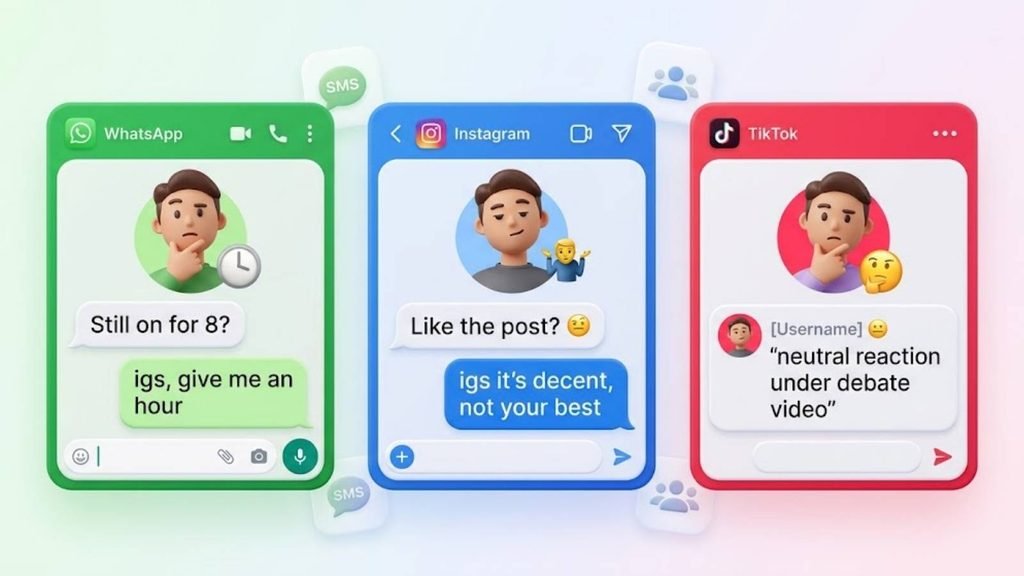
Reading a definition only gets you halfway there. Seeing IGS inside real WhatsApp chat, DM, and comment threads shows exactly how tone and timing shape its meaning.
WhatsApp Chat
Example in chat:
Friend 1: Can you send the file tonight instead of tomorrow?
Friend 2: igs, give me an hour
Instagram DM
Example in texting:
Friend 1: Did you like the new post?
Friend 2: igs it’s decent, not your best
TikTok Comments
- Often used under debate-style videos as a neutral reaction
- Shows mild agreement without fully co-signing the opinion
- Pairs well with 😅 or 👀 to soften the tone
- Rarely used to start arguments in comment threads
- Functions almost like a digital “meh, fair point”
Text Message
Example in texting:
Friend 1: So we’re still on for Saturday?
Friend 2: igs unless something comes up
Emotional & Psychological Meaning
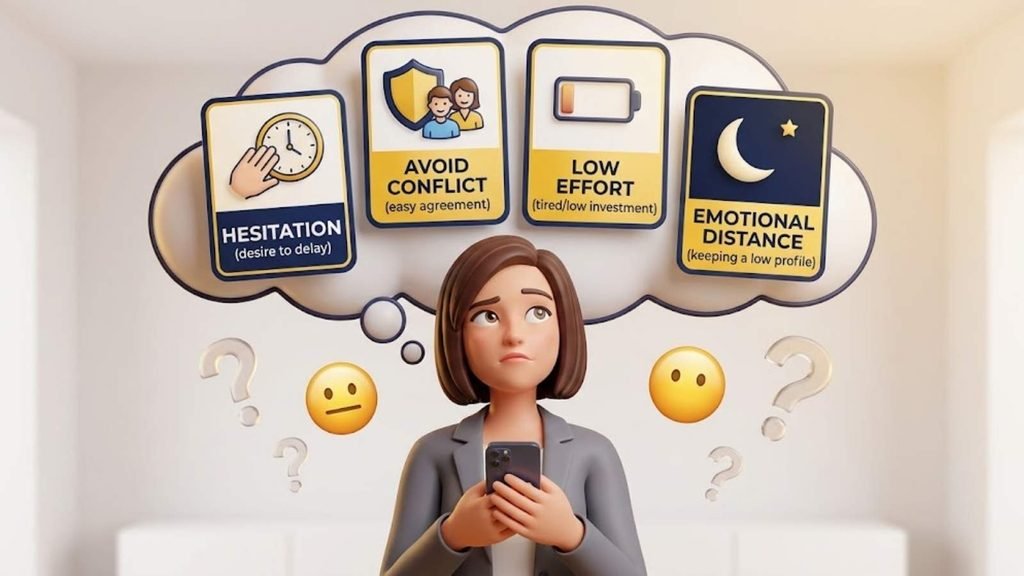
Underneath the casual spelling, IGS often reveals more about how someone actually feels than a straightforward “yes” ever would.
What it often reflects:
- Hesitation without wanting to explain why
- A desire to avoid conflict over small decisions
- Emotional distance keeping a reply low-effort on purpose
- Mild tiredness or lack of strong opinion either way
- Sometimes a polite way to mask real disagreement
Real-life behavior behind it:
- People use it when they don’t want to seem difficult
- It’s a way to agree without commitment
- Often shows up in tired, late-night conversations
- Can be a soft yes that’s really closer to a shrug
- Frequently followed by silence rather than more texting
Why Do People Type IGS Instead of Saying Yes?
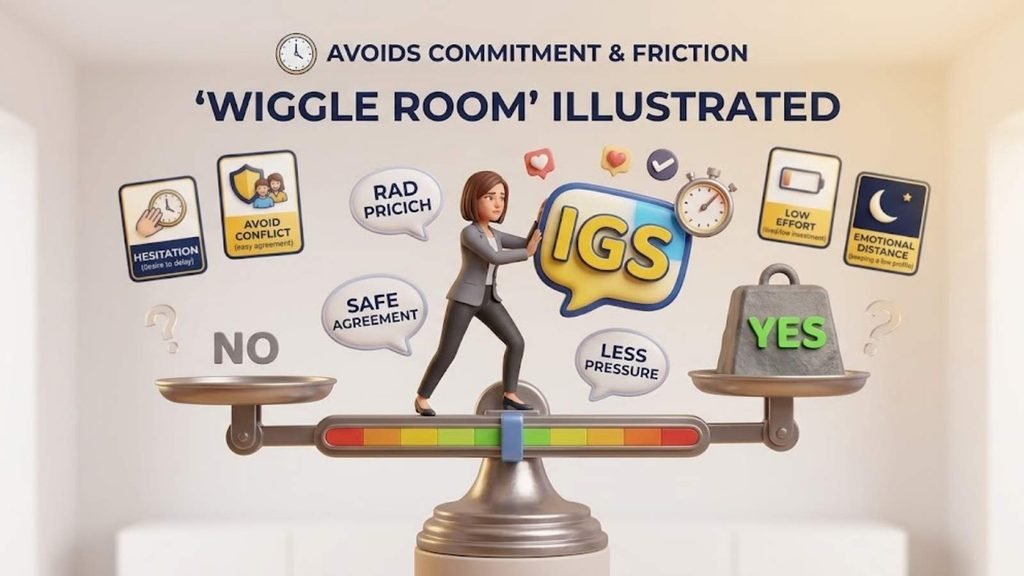
This is one of the most searched follow-up questions, and the answer says a lot about modern digital communication habits. A full “yes” feels like a commitment; igs meaning in chat lets people leave a little wiggle room.
- Avoids sounding overly eager or invested
- Protects the sender from changing their mind later
- Matches the low-effort tone of most casual texting
- Keeps the online conversation moving without friction
- Feels safer than a flat “no” when someone’s unsure
Usage in Different Contexts
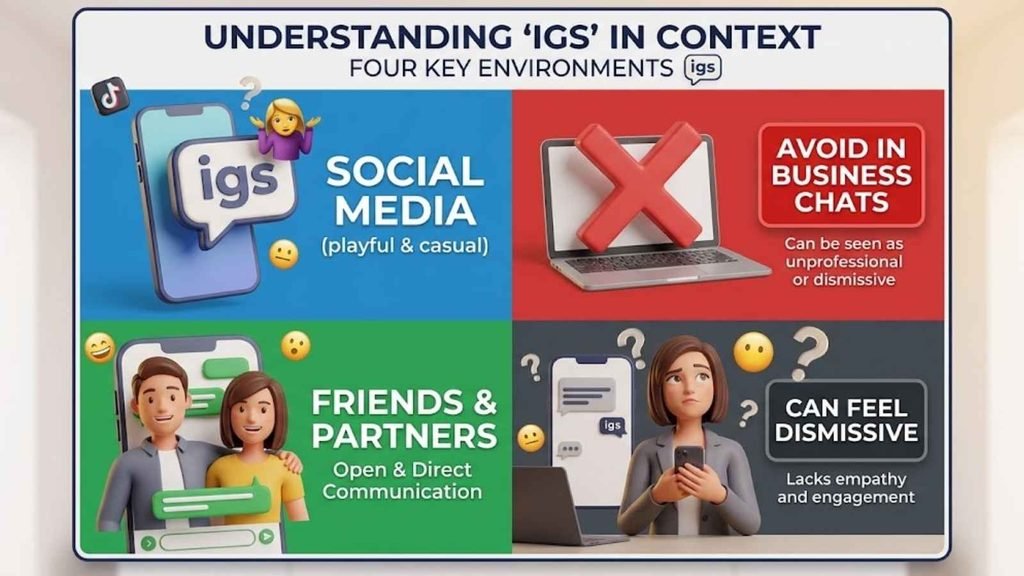
IGS doesn’t behave the same way everywhere the setting changes what it actually communicates.
1. Social Media
- Common under polls, comments, and TikTok comments sections
- Signals mild agreement with a post or opinion
- Rarely used in captions, mostly in replies
2. Friends & Relationships
- Used constantly in everyday group chat banter
- Can carry a teasing or playful undertone with close friends
- Sometimes hides real feelings behind a casual shrug
3. Work or Professional Settings
- Generally avoided in formal emails or Slack messages
- Can come across as disinterested to coworkers or managers
- Better replaced with “sounds good” or “that works” at work
4. Casual vs Serious Tone
- In casual chats, it’s harmless and totally normal
- In serious or emotional conversations, it can feel dismissive
- Always weigh the topic before dropping an igs
IGS vs Similar Texting Abbreviations
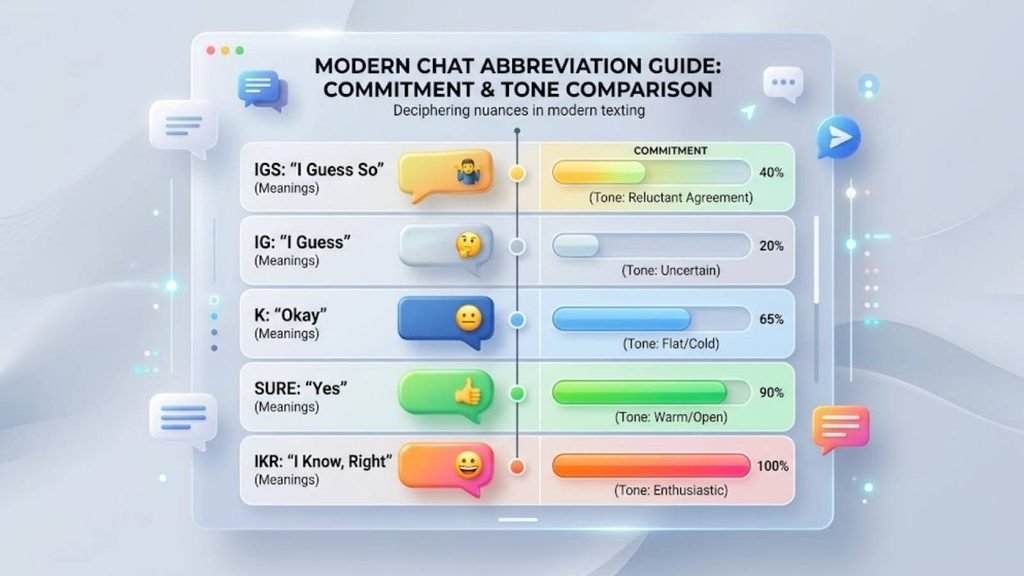
IGS has plenty of texting cousins, and mixing them up is one of the fastest ways to send a confusing reply.
| Abbreviation | Meaning | Tone |
| IGS | I Guess So | Reluctant, mild agreement |
| IG | I Guess | Slightly more uncertain, shorter |
| K | Okay | Flat, sometimes cold |
| Sure | Yes, agreeable | Warmer, more open |
| IKR | I Know, Right | Agreement with enthusiasm |
| NP | No Problem | Reassuring, friendly |
Common Misunderstandings
Because IGS looks so casual, it’s easy to read it the wrong way especially across generations or unfamiliar group chats.
1. Thinking it means a strong “yes”
- It’s reluctant, not enthusiastic agreement
- Reading it as a firm yes can lead to mismatched expectations
- Always check the context before assuming full commitment
2. Assuming it’s rude
- It’s usually not meant as an insult
- Comes across blunt mainly to people unfamiliar with chat culture
- Tone depends more on relationship than the letters themselves
3. Confusing it with other abbreviations
- Easily mixed up with “IG” or even Instagram
- Context clues like sentence structure usually clear it up
- When unsure, a quick “what do you mean?” solves it fast
4. Using it in serious situations
- Feels dismissive in emotional or important conversations
- Better to spell out real feelings in serious moments
- Save IGS for low-stakes, everyday decisions
Comparison Table
A side-by-side view makes the IGS meaning in text even easier to lock in.
| Term | Commitment Level | Best Used For |
| IGS | Low | Casual plans, mild agreement |
| Yes | High | Confirmed decisions |
| Maybe | Very Low | Genuine uncertainty |
| Fine | Medium | Slightly reluctant agreement |
| Absolutely | Very High | Enthusiastic confirmation |
Key Insight:
The biggest key insight here is that IGS sits in the “soft agreement” zone closer to a shrug than a real commitment, which is exactly why tone and timing matter so much.
Variations / Types of IGS
- igs lowercase, the most common casual form
- IGS capitalized, sometimes used for slight emphasis
- igss stretched version adding extra reluctance or drama
- igs 🤷 paired with emoji for a clearer tone
- igs ig doubled up for extra casual, low-effort vibes
How to Respond When Someone Uses IGS
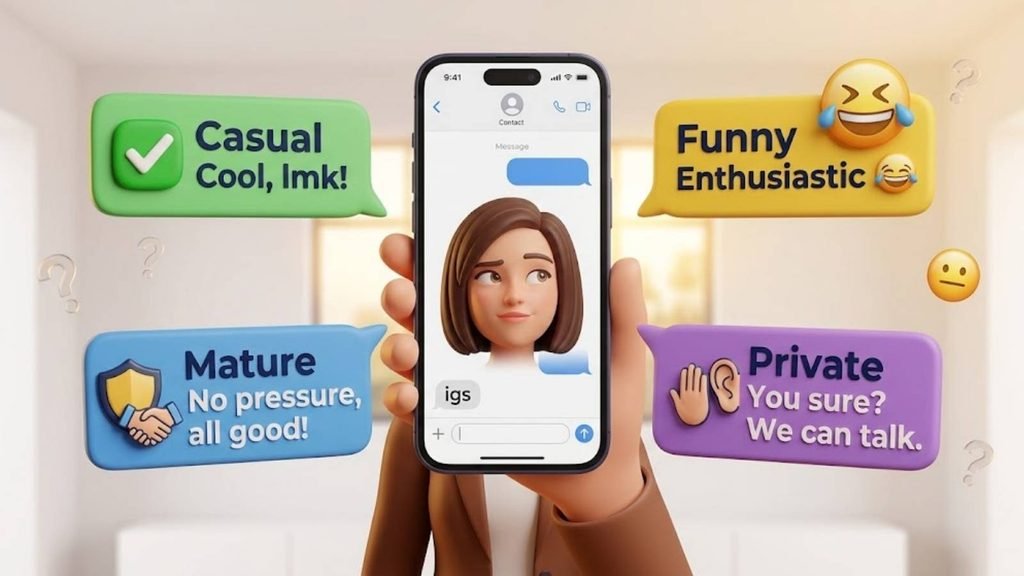
Getting an igs back doesn’t always need a reply, but when it does, the right tone matters.
Casual Replies
- “Cool, lmk if that changes”
- “Bet, we’ll figure it out”
Funny Replies
- “Wow, so enthusiastic 😂”
- “That’s the most hype yes I’ve ever seen”
Mature / Confident Replies
- “All good either way, just let me know“
- “No pressure, we can decide later”
Private or Respectful Replies
- “You sure? We can talk if you’re unsure“
- “Totally fine to say no, just be honest“
Is It Okay to Use IGS in Professional Chats?
Short answer: mostly no. In workplace digital communication, IGS can easily read as disinterest, even when that’s not the intention.
- Safer alternatives include “sounds good” or “works for me”
- Save IGS for friends, not managers or clients
- Formal settings reward clarity over casual shorthand
- Exception: very informal, close-knit startup or creative teams
- When in doubt, spell out your actual answer at work
Regional & Cultural Usage
Like most internet slang, IGS doesn’t evenly spread usage shifts by region and platform habits.
| Region | Popularity | Common Platform |
| Western Culture | High | SMS, iMessage, Instagram |
| Asian Culture | Moderate | WhatsApp, Discord |
| Middle Eastern Culture | Growing | WhatsApp, Snapchat |
| Global Internet | Widespread | TikTok, group chats everywhere |
Western Culture
- Deeply woven into everyday SMS lingo
- Common among teens and young adults especially
Asian Culture
- Often mixed with local slang in bilingual chats
- Growing fast among younger, English-fluent users
Middle Eastern Culture
- Picking up traction through youth-driven group chat trends
- Frequently blended with regional expressions for extra flavor
Global Internet Usage
- Recognized broadly enough to skip explanation in most chats
- One of many shorthand terms uniting global texting etiquette
IGS Meaning in Government and Formal Contexts
Outside of texting, “IGS” can stand for entirely different things depending on the organization; it’s not a fixed, universal acronym once you leave casual chat. In official or agency documents, it’s sometimes shorthand for a specific program, office, or system name that varies by country and department. If you spot IGS in a government or formal document, it almost certainly has nothing to do with “I Guess So” . Always check that specific agency’s own glossary or official site to confirm what it stands for in that context.
Using IGS in Dating Apps and Online Conversations
On dating apps, a lukewarm igs can say more than people intend. In this setting, it usually signals hesitation rather than genuine interest.
- Can read as low investment in a match or plan
- Better to pair with a follow-up question to keep things warm
- A string of one-word “igs” replies often signals fading interest
- Worth clarifying intent directly if the conversation matters to you
- Common in early-stage chats before real rapport is built
Pop Culture and Trend Timeline of IGS
- Early texting era: shorthand kept minimal, “IG” dominates
- Smartphone boom: fuller version IGS gains traction for clarity
- Social media era: spreads through TikTok comments and Reels captions
- Present day: firmly part of everyday Gen Z slang and beyond
FAQs
1. What does IGS mean in a text?
IGS meaning in text is “I Guess So,” a casual way to show mild, reluctant agreement rather than full enthusiasm.
2. Is IGS the same as IG?
They’re related, but IGS spells out the fuller phrase, while IG (“I guess”) is shorter and slightly more uncertain in tone.
3. Does IGS mean yes or no?
IGS meaning in text leans toward a soft yes agreement, but without much excitement or firm commitment behind it.
4. Is it rude to reply with IGS?
Not usually. The IGS meaning in text is casual, not disrespectful, though it can feel dismissive in serious or emotional conversations.
5. Can I use IGS at work?
It’s best avoided professionally. The IGS meaning in text works fine with friends but reads as disinterested in formal settings.
6. What’s a good reply to IGS?
A light “cool, lmk” or a direct check-in works well, since the IGS meaning in text often hides genuine hesitation worth asking about.
7. Why do people use IGS instead of a full sentence?
Because the IGS meaning in text fits perfectly into fast, low-effort digital habits it says just enough without over-committing.
Conclusion
At its core, the IGS meaning in text comes down to one simple idea: reluctant, low-pressure agreement dressed up in three casual letters. Once you understand igs meaning in chat, those short replies stop feeling confusing and start feeling like exactly what they are a shrug turned into shorthand. Whether it shows up in a WhatsApp thread, an Instagram DM, or a group chat debate, the IGS meaning in text rarely changes much: it’s agreement without enthusiasm, said quickly.
Next time you see it land in your inbox, don’t overthink it, read the tone, check the context, and reply the way that fits your friendship. And if you’re ever unsure what someone really means, there’s no shame in just asking.

Grace Anderson is an English language writer who shares clear grammar lessons, practical writing tips, and helpful examples for learners.



1 thought on “IGS Meaning in Text: The Surprising Real Meaning (2026)”